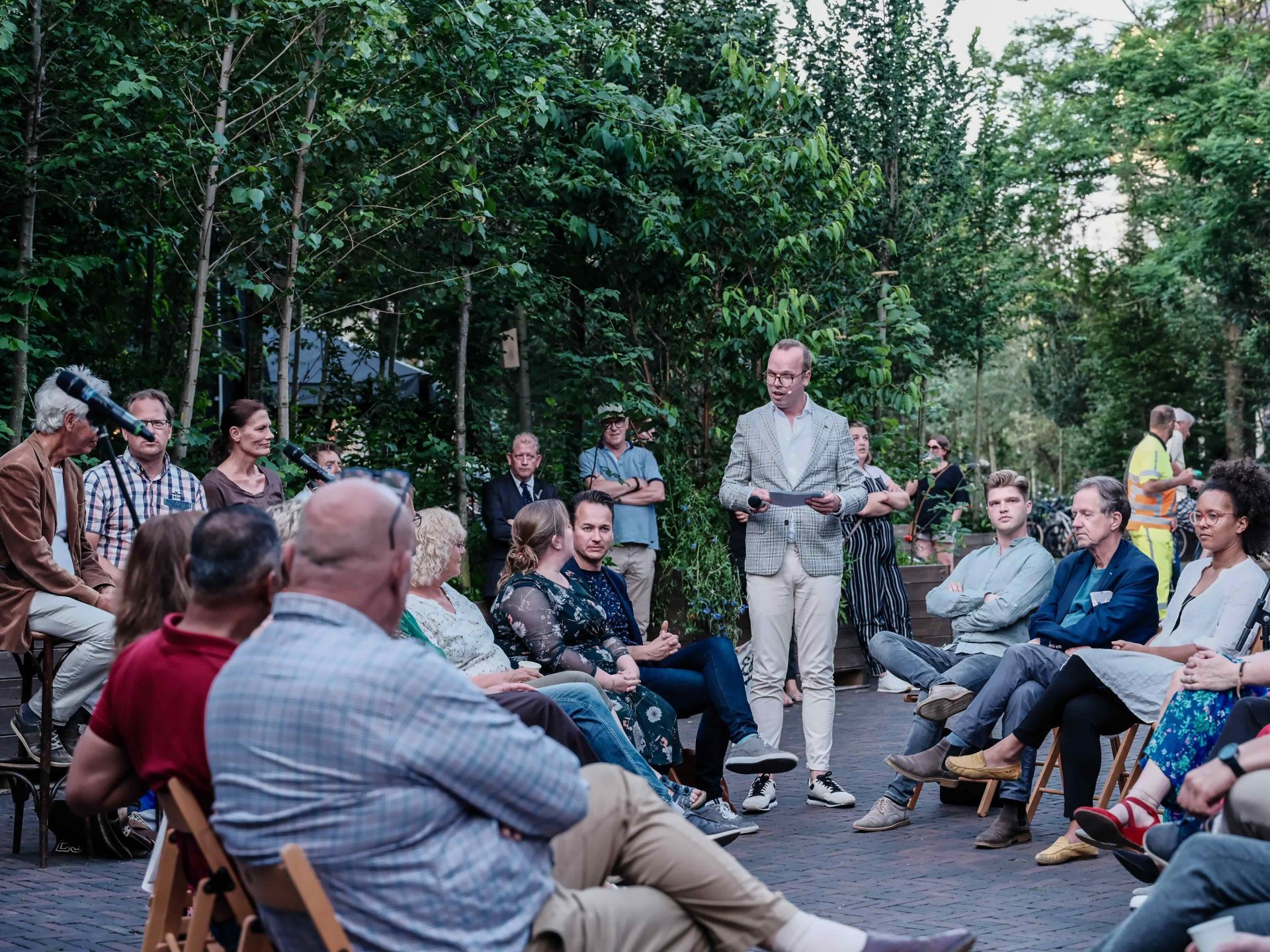
Nine countries are joining forces to keep the power of the European Capitals of Culture alive, even after the year itself has ended. Initiators from the Netherlands, Serbia, Hungary, Estonia, Germany, Finland, Latvia, Portugal and France are launching the European Capital of Culture Echo (ECoC Echo) project together. Leeuwarden is regarded at European level as one of the best examples of a Capital of Culture that has built a strong follow-up to its title year, and is one of the initiators. “A title year like that isn’t an endpoint, it’s a beginning,” says director-CEO Immie Jonkman. “With ECoC Echo, we’re looking for ways to keep the fire that’s lit during that year smouldering. By working together at a European level, we learn from each other how to hold on to positive change, and draw fresh inspiration from it too.”
From Leeuwarden to Latvia
The project brings together former, current and future European Capitals of Culture: Leeuwarden 2018 (the Netherlands), Novi Sad 2022 (Serbia), Veszprém 2023 (Hungary), Tartu 2024 (Estonia), Chemnitz 2025 (Germany), Oulu 2026 (Finland), Liepāja 2027 (Latvia), Évora 2027 (Portugal) and Bourges 2028 (France). Local and regional cultural partners and policymakers are also taking part, such as the Association of Local Governments of Tartu County (Estonia), the National Development Centre (Hungary) and the Intermunicipal Community of Alentejo Central (Portugal).
Kickoff in Tartu
The project’s official kickoff took place in Tartu (Estonia), the lead partner of ECoC Echo. During the kickoff from 27 to 30 May 2025, partners from all participating countries came together to align plans and ambitions. As lead partner, Tartu handles the project’s overall coordination, communication and programme management.
Sille Talvet-Unt, representative of Tartu 2024 and project leader of ECoC Echo: “Preparing for and delivering a European Capital of Culture has given cultural life and the economy in many regions a powerful boost. It’s now just as important to steer that momentum towards development that lasts and truly takes hold,” says Sille. “ECoC Echo offers a unique opportunity to learn from both past and future Capitals of Culture, and to bring new knowledge to our cities in the field of cultural organisation and international cooperation.”
First knowledge exchange in Veszprém
From 6 to 8 October 2025, Veszprém hosted the very first Knowledge Transfer Seminar of the ECoC Echo project. The gathering focused on sharing knowledge about the legacy of the Veszprém–Balaton 2023 ECoC programme. Participants, including representatives of the cities, cultural institutions and policymakers involved, exchanged practical experiences on themes such as cultural programming, infrastructure investment, financial sustainability, organisational structures and emotional impact.
There were also study visits to key locations in the region, such as CODE – Center of Digital Experiences, the ActiCity Dance and Movement Centre, the Modern Art Center, the renewed sports campus of the University of Pannonia, and venues from the Veszprém–Balaton 2023 programme such as the “Memory Machine” exhibition at the Laczkó Dezső Museum. Speakers during the sessions included Tibor Navracsics (Minister for Regional Development / former European Commissioner for Culture) and Gyula Porga (mayor of Veszprém). The outcomes of this first seminar will help further develop strategies within ECoC Echo to keep the legacy of Capitals of Culture alive across borders.
New energy for culture and region
Over the coming years, the nine countries will develop strategies to root the networks, knowledge and energy from their title year in local plans. In this way, the legacy of the ECoC becomes fertile ground for regional growth and new ways of organising culture.
The project has a joint budget of approximately €2.27 million and is supported by the European Union’s Interreg Europe programme, which supports interregional cooperation and helps governments across Europe develop better policy. The final results will be presented in late 2028 in the European Capital of Culture Bourges, France.
The ECoC Echo project is co-financed by the European Union’s Interreg Europe programme, which supports interregional cooperation and helps public authorities across Europe develop better policy.